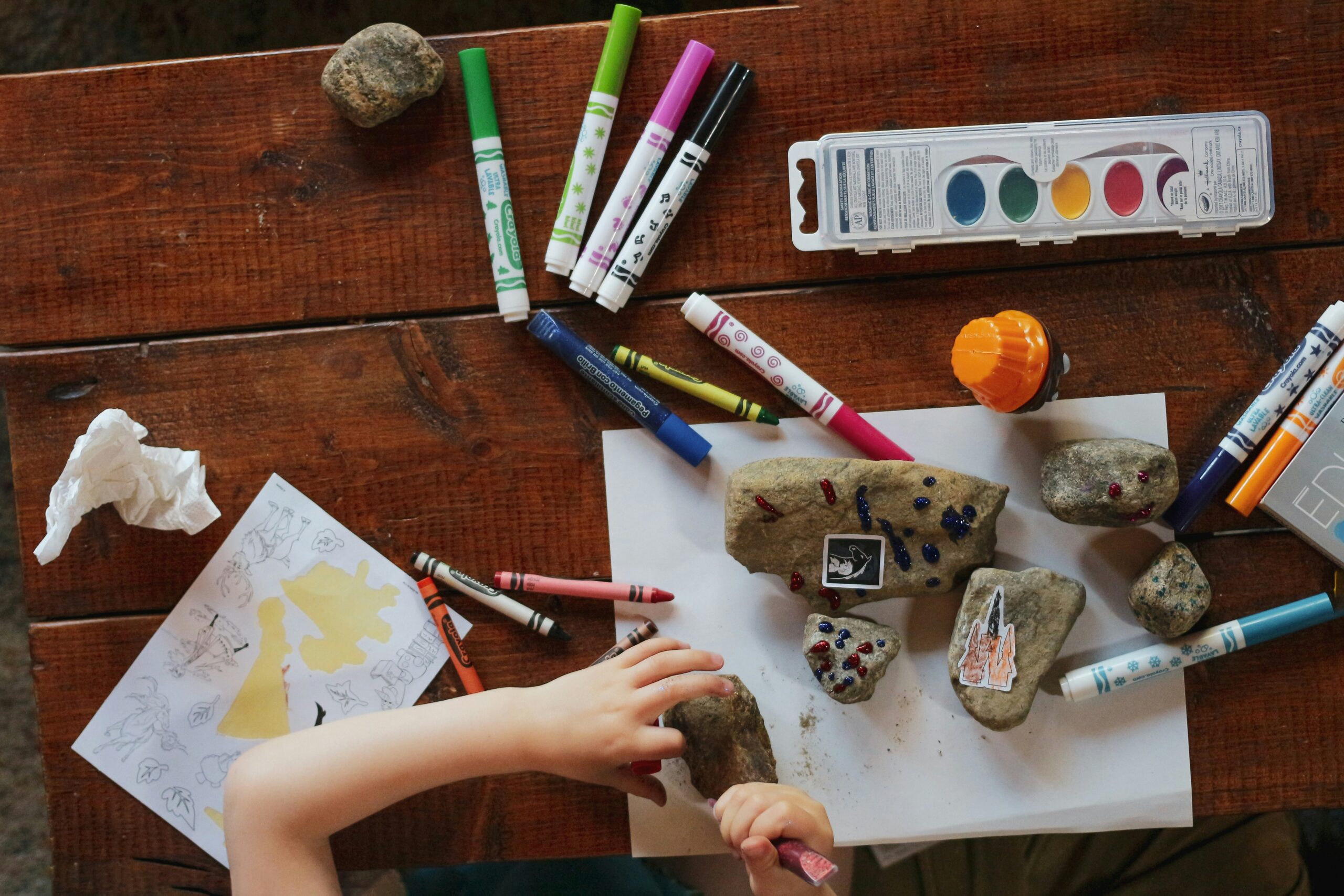
A lot of parents probably empathize with the situation where the kids are home, but you also have things to get done like cooking dinner or putting a load into the laundry. I often told myself that these are reasonable situations for screentime– it keeps the kids safe and occupied while I quickly put a meal together or run up the stairs. But, I also recently learned that this is one of the worst times for screentime.
Expecting to Be Entertained
A lot of parents of this generation tend to be constantly “on,” in a hurry, and/or in a state of burnout. We’ve filled boredom with doomscrolling and get some form of “parent guilt” if we’re not constantly engaging with our children or wondering what else we can be doing for them. As such, when we can’t give them our attention, we feel the need to fill it with something else. I often heard the saying that boredom is good for children and their creativity, but it never seemed to come to mind when my toddler was pulling my arm to play or my older child was asking me question after question if she could do this or that. Is it wrong for a parent to want some peace and quiet?
However, turning on the TV or letting a child have iPad time puts you on an infinite loop. Bored? Watch some TV. Can’t watch the kids for 20 minutes? Get your iPad. Children can’t handle the emotion of boredom and need their parents to entertain them.
The Benefits of Boredom
As we have outlined in our vision, we have identified several characteristics that we see across the board in top high school students. A couple of them are curiosity and critical thinking, but, in this case, I consider the most important to be taking initiative.
By making space for your child to work through their boredom, your child has to begin thinking about how to entertain themselves. Should I color? Should I go to my room and play with my dolls or read? They also can’t constantly seek your attention or approval, which also helps them develop self-satisfaction in their actions and choices. While self-initiated play comes with its own set of benefits, having to make decisions for themselves is a great skill to build early on. When parents ask me what are traits that signal to me that a student is not ready or “able” to get into a top university, one of the common traits I outline is not being able to take initiative on their own; constantly needing guidance (or what we would call “handholding”) from another person rather than thinking and make decisions on their own slows down progress so much that, no matter how bright they are, it may be too late to catch up.

What To Do Instead
Depending on the age of your child(ren), this can be tackled in different ways. If you have children who can play independently, try your best to incorporate an activity into their routine when you know you have to do something like prepare dinner. My daughter, who is currently in first grade, has been helping me out in the kitchen since she was four years old. I love this kids cooking tool set from Amazon. Before we start, she decides what part she wants to contribute to, like cutting up vegetables or mixing ingredients. When it’s not her part, she decides between other activities she likes to do independently like reading or drawing. My son, who is three years old, knows that this time is when he can play with his sticker and coloring books at the kitchen table so he can still call out to me when he needs help or wants to show me something. Make sure to also give them a lot of positive affirmation to build in the habit. “Wow, you made this? I would love to see more tomorrow.” “Yes, I know it was hard to be by yourself today, but, look, you played on your own for 10 minutes. Why don’t we read together for 10 minutes before bedtime?”
For younger children, this is much more difficult and, who knows, they may not even be as interested in something like screen time at that age. They also need more supervision for their own safety. The recommendation I can give is to save their favorite toys for this time and let them play in a play pen or designated “safe space” while you quickly do your own thing. I understand that this is especially difficult with the first child, but, once I had my second, it was impossible to do otherwise, and my son (the second child) is much more comfortable taking initiative than my daughter!
Conclusion
It’s not wrong to want some peace and quiet– 20 minutes where you can cook dinner or clean something up without your child asking you for something. The more your child can thrive in boredom and entertain themselves, the more of that time you will eventually gain and the more you’re indirectly helping them develop initiative, curiosity, and critical thinking skills.